News | 11/02/2025

Clinical study on new therapy for Crohn's disease

Microbiome as a possible key factor in treatment
A key component of Crohn's disease therapy can be a special diet. Sufferers feed exclusively on this product for six to eight weeks and completely abstain from solid food. However, it was previously unclear exactly why this helps. Researchers at the Technical University of Munich (TUM) and the LMU Hospital have now been able to decipher the mechanism behind this. Building on these results, they are now launching a clinical study on a new type of therapy. To this end, they are combining nutritional therapy with microbiome transfer, better known as stool transfer.
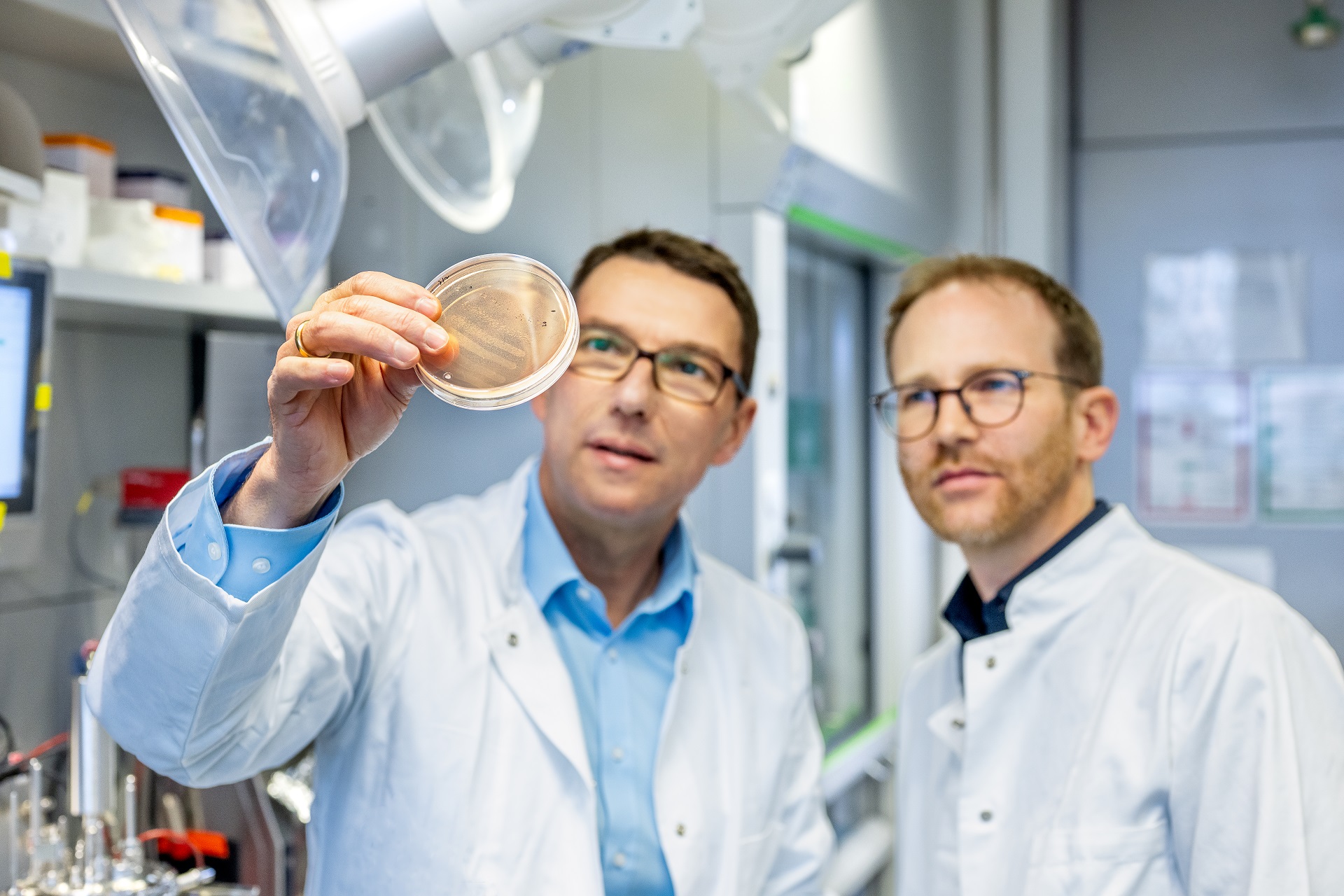
The team led by Prof. Dirk Haller and Dr. Tobias Schwerd (from left to right) has developed a new approach to the treatment of Crohn's disease.

Vitamins, minerals, proteins, carbohydrates and fatty acids: the special nutritional drink contains all vital nutrients and works without medication for most people with Crohn's disease within a few days. This is why exclusive nutritional therapy (EEN) has been used successfully for several decades, primarily in children and adolescents, as it not only combats inflammation but also has a positive effect on growth. However, this therapy is also effective in adults. However, the symptoms return in most people within a year of the end of therapy.

So how can the effect of nutritional therapy be prolonged? Dirk Haller, Professor of Nutrition and Immunology at TUM and Director of the Central Institute of Nutrition and Food Research, and Tobias Schwerd, Head of Pediatric Gastroenterology and Hepatology at the Dr. von Hauner Children's Hospital, have developed a starting point for this. The researchers were able to demonstrate how the microbiome in the gut, i.e. the complex community of all microbes, changes as a result of nutritional therapy and is partly responsible for the success of the treatment.

They found that the medium-chain fatty acids contained in the diet have a positive effect on certain bacteria in the gut, which multiply and reduce inflammation. And the study shows even more: in an artificial intestinal model, the stool of patients was treated with the drinkable food, whereupon the microbiome adapted. If this was then added to a mouse, no inflammation developed. If, on the other hand, it was not adapted in advance by the liquid diet, the mouse developed symptoms typical of inflammation.

Joint study with the Dr. von Hauner Children's Hospital at the LMU Hospital

The team is now conducting a clinical study to investigate whether this mechanism also works in humans - i.e. whether a healthier microbiome can be specifically established following the "microbiome reboot". The aim is to maintain the inflammation-free state for as long as possible. To achieve this, the researchers are relying on a fecal microbiome transfer, colloquially known as "stool transfer", following nutritional therapy.

In this procedure, healthy people who have been extensively tested "donate" their microbiome, which is medically prepared and processed into capsules. This is done at the University Hospital of Cologne by Maria J.G.T. Vehreschild, Professor of Infectiology, who is also involved in the clinical study. Patients take the capsules following nutritional therapy. Dirk Haller says: "Microbiome transfer is already being used successfully for other intestinal diseases. We now hope that this transfer can also prove to be a new therapeutic approach for Crohn's disease."


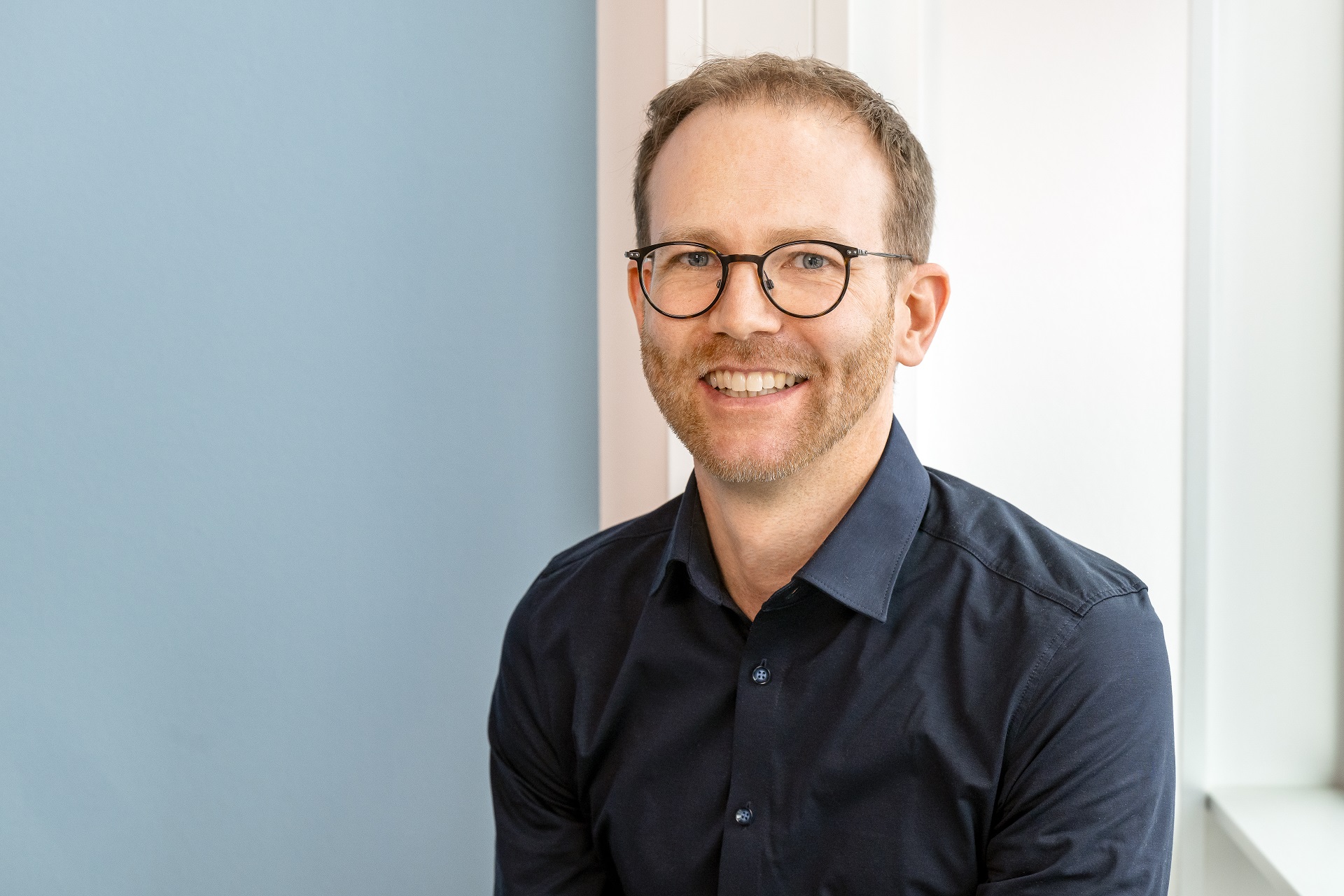
PD Dr. Tobias Schwerd
Privatdozent Dr. Tobias Schwerd heads the Department of Paediatric Gastroenterology and Hepatology at the Hauner Children's Hospital

Tobias Schwerd says: "We are concentrating on three main questions in the study: How safe is this therapy? How practicable is it? And can it stabilize those affected and prevent or at least delay the recurrence of the inflammation? If we succeed in integrating this healthy intestinal colonization into the patient's microbiome in the long term, we will have taken a major step forward in therapy."
Publication

Häcker, D., Siebert, K., Smith, B. J. et al: Exclusive enteral nutrition initiates individual protective microbiome changes to induce remission in pediatric Crohn's disease,Cell Host & Microbe (2024)

doi.org/10.1016/j.chom.2024.10.001

Patients with Crohn's disease wanted for participation in clinical study

The EEN-RICH study is currently looking for additional test subjects between the ages of 14 and 45. Children from the age of 8 can also take part. Further information on participation: http://www.een-rich.de/

Both the recently published study and the EEN-RICH study are funded by the Leona M. and Harry B. Helmsley Charitable Trust.

Scientific contact person:

PD Dr. med. Tobias Schwerd

Department of Pediatric Gastroenterology and Hepatology, Children's Hospital and Children's Polyclinic at the Dr. von Hauner Children's Hospital

Prof. Dr. Dirk Haller

Technical University of Munich

Originally translated with DeepL