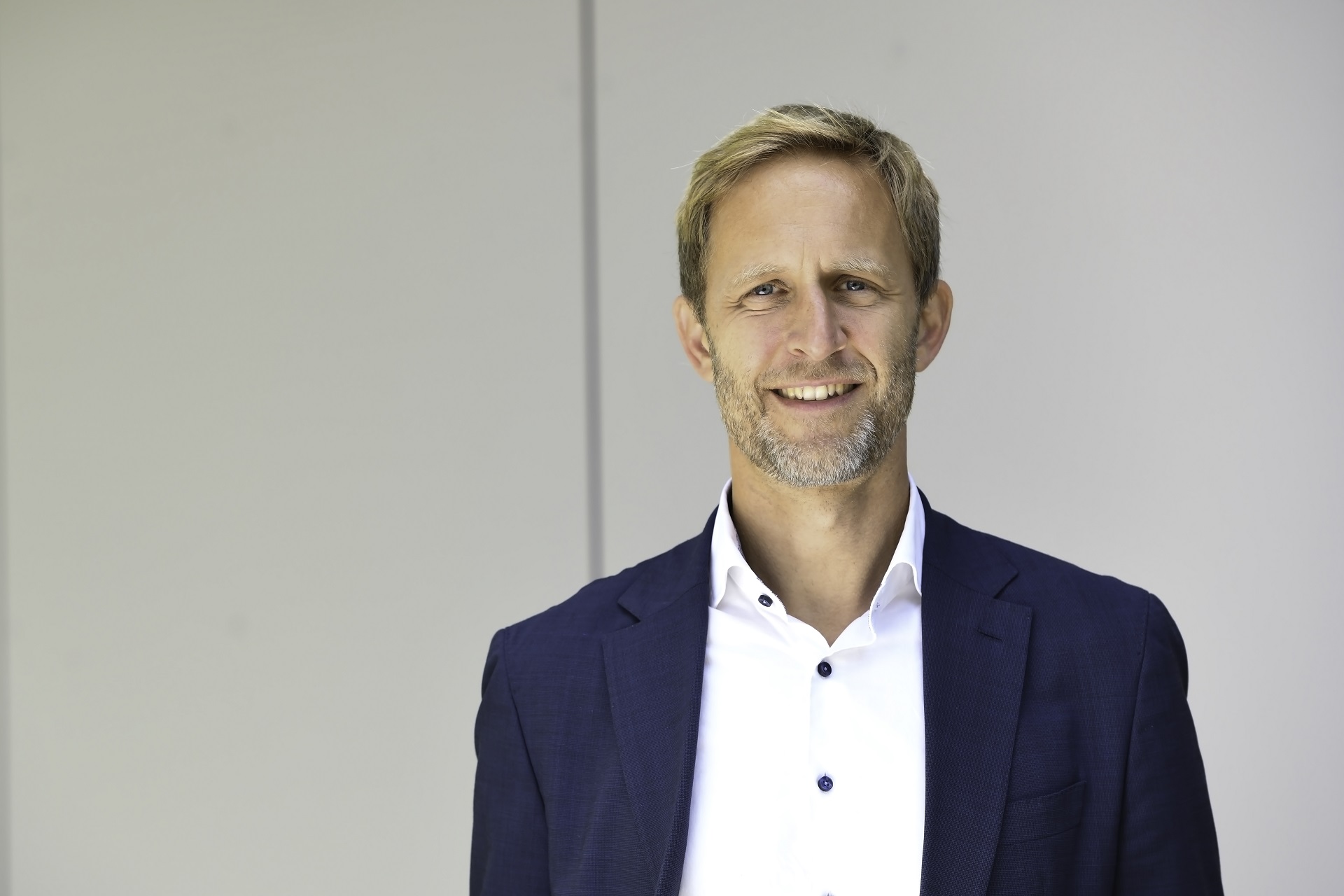
From 2011, he held the Junior Professorship for Sports Informatics, an Adidas AG endowed professorship, and from 2017 the Chair of Machine Learning and Data Analytics. After a visiting professorship at the Motion Analysis Lab at Harvard Medical School in 2016, he became Chair in Erlangen. Further visiting professorships followed at the Massachusetts Institute of Technology in 2018 and at Stanford University in 2023. What attracts him to LMU Klinikum? "It is one of the largest and most renowned university hospitals in the world with a very high international profile," says Eskofier. "My institute is within walking distance of the hospital building in Großhadern, so it will be an interdisciplinary environment with short distances." 30 employees will support him. The focus of the work: researching and testing artificial intelligence methods in medicine.
Human intelligence is understood to mean, among other things, the ability to think abstractly and rationally in order to derive purposeful action. "No artificial intelligence can do that," Eskofier clarifies. "But AI is capable of machine learning and recognizing patterns". However, the prerequisites for this are innovative algorithms, better availability of computing power and the availability of digital data, as AI can only learn from this. In the future, all patients will therefore need a digital twin, in compliance with data protection regulations.
As an important pillar, Prof. Eskofier will set up an e-health core facility with sensor and motion analysis measurement technology, which will also be available to other interested chairs and clinics. In particular, this includes a motion analysis laboratory in which optical motion recording is carried out using force plates. Measurement technology for validation will also be acquired. This includes, for example, an instrumented treadmill for automated multiparametric gait analysis, immersive VR systems, portable biosignal measurement systems for EEG, EMG, ECG, polysomnography, spiroergometry and a whole-body IMU system that can measure acceleration, angular velocity and orientation of the body in real time. Sounds fascinating? It is! "Artificial intelligence is one of the big topics of the future, and not just in medicine," says Prof. Eskofier. And at the same time, he is cautious about exaggerated expectations: "It will be decades before AI can compete with human intelligence."
"With the new Chair of 'AI-supported therapy decisions' at LMU, we have been able to recruit an expert who is deeply familiar with the utilization of artificial intelligence in medicine. Under his leadership, we hope that the Institute for Artificial Intelligence at the LMU Klinikum will have even greater impact and visibility," says Prof. Markus M. Lerch, Chairman of the LMU Klinikum.