press releases | 20/10/2025
In Germany, almost 18 million people are affected by a mental illness: Depression in particular, but also anxiety disorders or schizophrenia, for example. It is a little known fact that people with severe mental illness die on average ten to 15 years earlier than the rest of the population. The problem is largely due to physical ailments, especially cardiovascular diseases, which are more common than average among people with severe mental illness. "That's why," explains Koutsouleris, "it's worthwhile for patients to pay attention to risk factors such as lack of exercise, smoking or being overweight or obese."
Keyword obesity: experts still do not know beyond doubt why so many mentally ill patients put on weight. "In addition to the known side effects of certain medications, we suspect, based on some findings, that this has to do with brain changes, which in turn are linked to the mental illness," says Koutsouleris. Can these brain changes - in the sense of an oracle - be used to predict at the time of initial diagnosis which patients will subsequently have an increase in body mass index (BMI)?
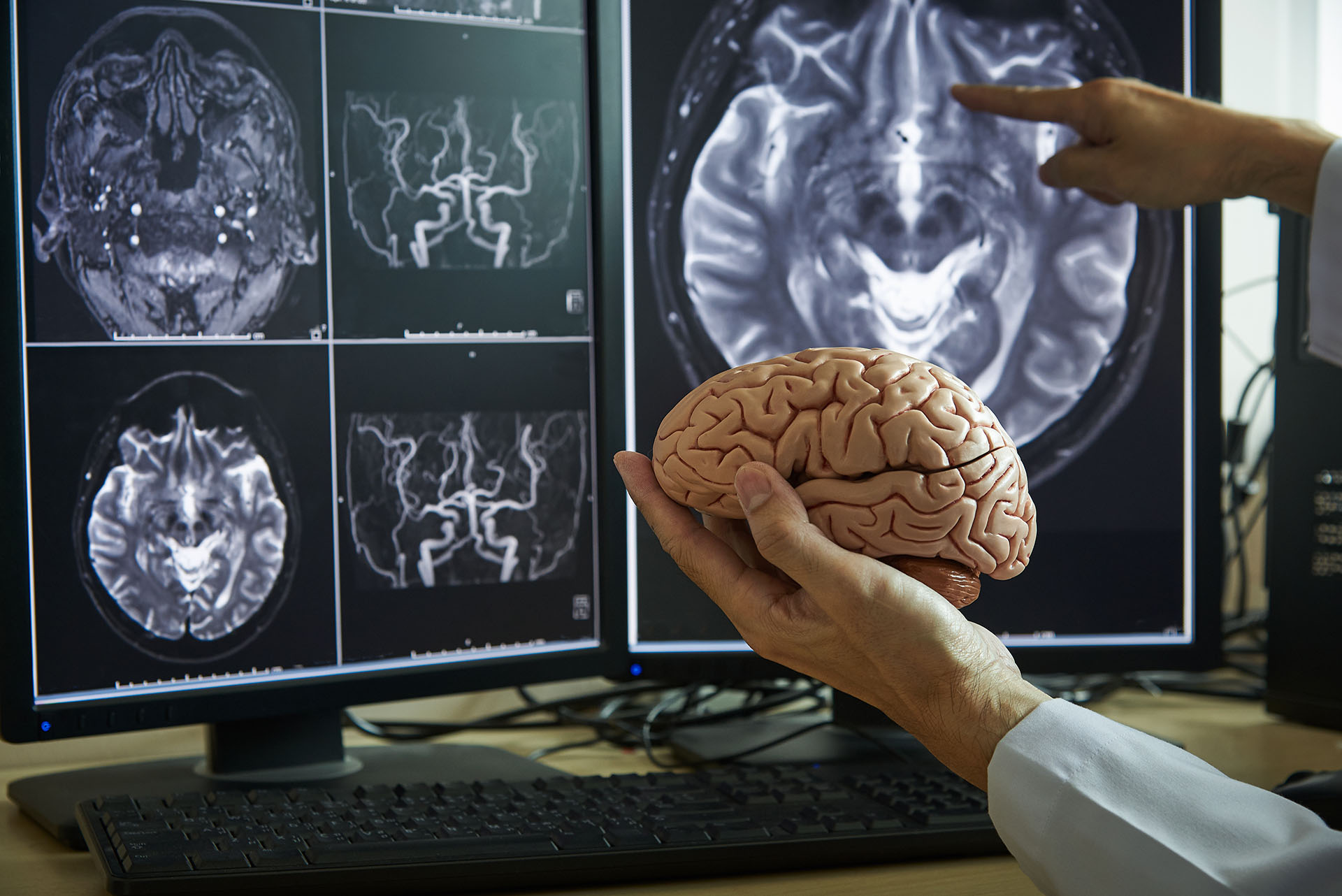
In order to establish such an oracle, an international team of researchers first created a so-called machine learning model. In other words, the scientists fed this type of artificial intelligence with MRI images of the brains of healthy people. The model was supposed to use the brain scans to independently learn how to determine a person's individual weight. "And our algorithm does this quite well," says the Munich psychiatrist.
Second step: the researchers applied their system to the MRI brain scans of patients with mental illnesses. "In these cases, our prognosis model made systematic errors," explains Koutsouleris, "it incorrectly determined the weight of the corresponding patients." In the case of schizophrenia, for example, it overestimated the weight because certain regions of the brain in these people - for example the anterior cerebral cortex, in which parts of the reward system are anchored - are smaller than usual. This system significantly controls our eating behavior," continues Koutsouleris, "and our prediction model had previously learned from healthy people: less volume in these brain regions means higher weight." Although schizophrenia patients have smaller brain volumes when they are first diagnosed, they do not necessarily have a higher body mass index (BMI).
Third step: The researchers tracked the BMI of patients for a year after initial diagnosis and initial weight assessment: "And there we see that there is indeed a sharp increase in those patients for whom our AI model had misjudged towards a BMI that was too high." This is particularly the case with schizophrenia patients, but also with depression patients. Koutsouleris: "The difference between the estimated and the actually observed BMI, the so-called BMI gap, has a predictive power for the further weight development of the patients."
This oracle offers the opportunity for targeted prevention to prevent future weight gain. "We can try to persuade the people concerned to adopt a healthier lifestyle, for example by saying: try a weight reduction program, do more sport, eat more healthily," says the psychiatrist, "or we can give drugs such as metformin that reduce or prevent the risk of metabolic diseases. This would be a big gain, especially as there is evidence that less weight gain leads to less active inflammatory processes in the brain and therefore fewer psychiatric symptoms in the course of the disease."
As soon as the new tool has been refined with additional parameters such as the patient's individual genetics or blood values such as cholesterol etc. and is therefore even more accurate, it will be made available to all doctors for determining the BMI gap.
The BMIgap tool to quantify transdiagnostic brain signatures of current and future weight
Adyasha Khuntia, David Popovic, Elif Sarisik, Madalina O. Buciuman, Mads L. Pedersen, Lars T. Westlye, Ole A. Andreassen, Andreas Meyer-Lindenberg, Joseph Kambeitz, Raimo K. R. Salokangas, Jarmo Hietala, Alessandro Bertolino, Stefan Borgwardt, Paolo Brambilla, Rachel Upthegrove, Stephen J. Wood, Rebekka Lencer, Eva Meisenzahl, Peter Falkai, Emanuel Schwarz, Ariane Wiegand & Nikolaos Koutsouleris
Nature Mental Health (2025)
Clinic and Polyclinic for Psychiatry and Psychotherapy LMU Klinikum München
Nursing with heart and expertise: Experience the Nursing Careers Day at LMU Hospital on June 27, 2025 - a day full of inspiring insights into the demanding and holistic everyday life of nursing. Meet experts, discover a wide range of career opportunities and receive exciting information on jobs, training and further education. Come along, exchange ideas with colleagues and let yourself be inspired by nursing science in practice - without obligation and without registration.