The first patient worldwide with myasthenia gravis has been included in the study at the LMU Clinic. Myasthenia gravis (also known as myasthenia) is a rare autoimmune disease. In those affected, misdirected antibodies disrupt the communication between nerve and muscle. This causes muscle fatigue in various parts of the body, especially under stress and when tired.
The eyes are frequently affected: the eyelids close and those affected often see double vision. If the disease progresses severely, patients suffer from significant muscle weakness in their arms and legs, and vital functions such as speaking, swallowing and, above all, breathing can be severely impaired.
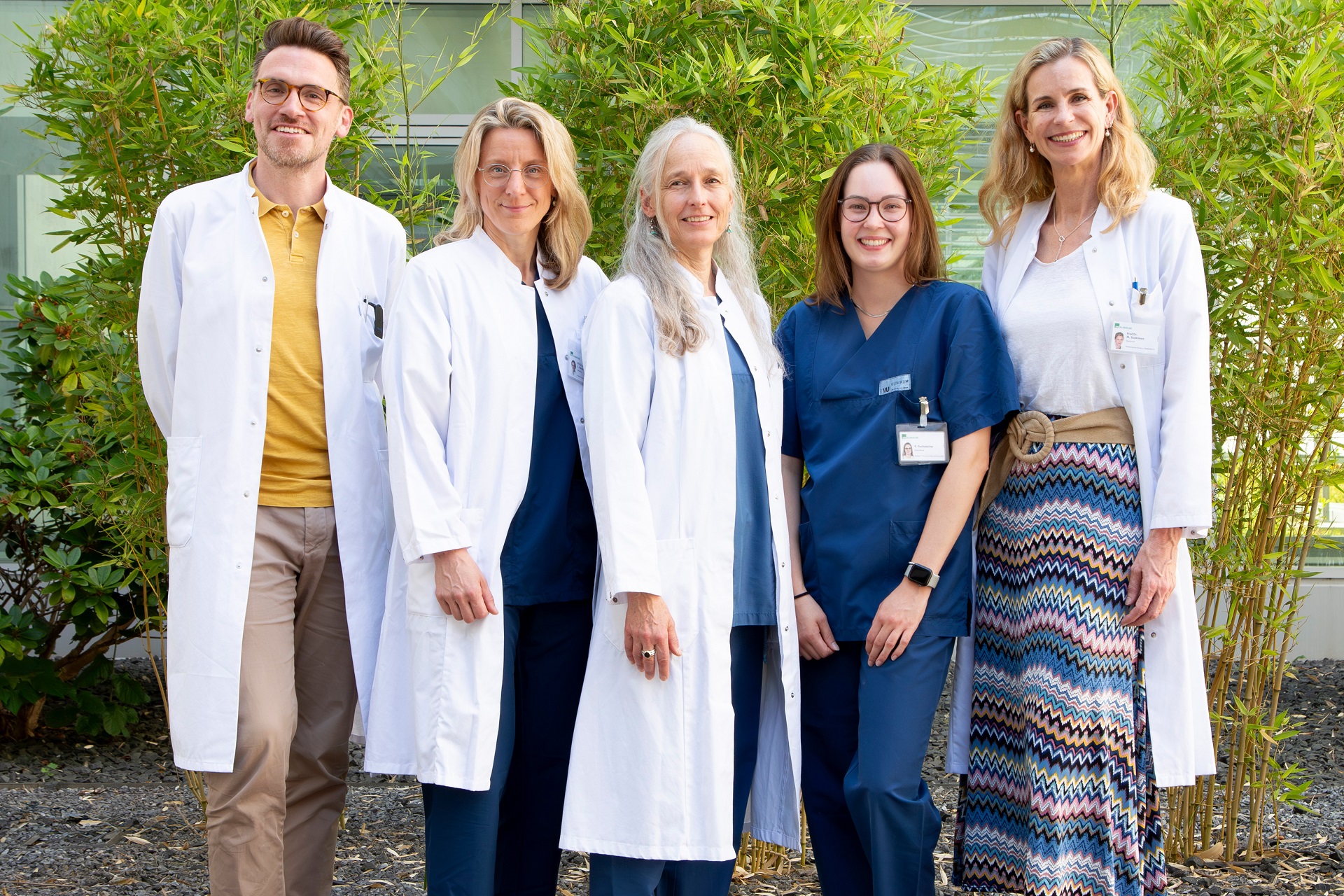
"We have already been able to treat one patient with progressive multiple sclerosis with CAR-T cells as part of the study, and another patient with multiple sclerosis is planned," says Prof. Dr. Tania Kümpfel from the Institute of Clinical Neuroimmunology.
The CAR-T cell infusion has already been carried out without complications on the hematology ward at the hospital. The patients will continue to be closely monitored and cared for by the neuroimmunology department in close cooperation with the hematology department.
The prerequisite for conducting this highly complex phase 1 study is the excellent cooperation in an interdisciplinary team at a university center, above all between neuroimmunology and hematology at the LMU Clinic. Other departments relevant to the study at the LMU Clinic include the Department of Transfusion Medicine, Cell Therapeutics and Hemostaseology (ATMZH) - where the leukapheresis required to produce the CAR-T cells takes place - as well as Neuroradiology, Neurology, Laboratory Medicine and the Max von Pettenkofer Institute.
The Großhadern site is therefore ideal for conducting this study at the LMU Clinic. The Institute of Clinical Neuroimmunology has great expertise in the treatment of neuroimmunological diseases, has been participating in international studies for over 20 years and cares for many patients with neuroimmunological diseases. On the other hand, there is already a great deal of expertise in the use of CAR-T cells and management of this therapy in haematology: over 150 patients have already been treated with CAR-T cells there.