NeuroPain: personalized treatment for chronic back pain
press releases | 02/06/2026
NeuroPain: personalized treatment for chronic back pain
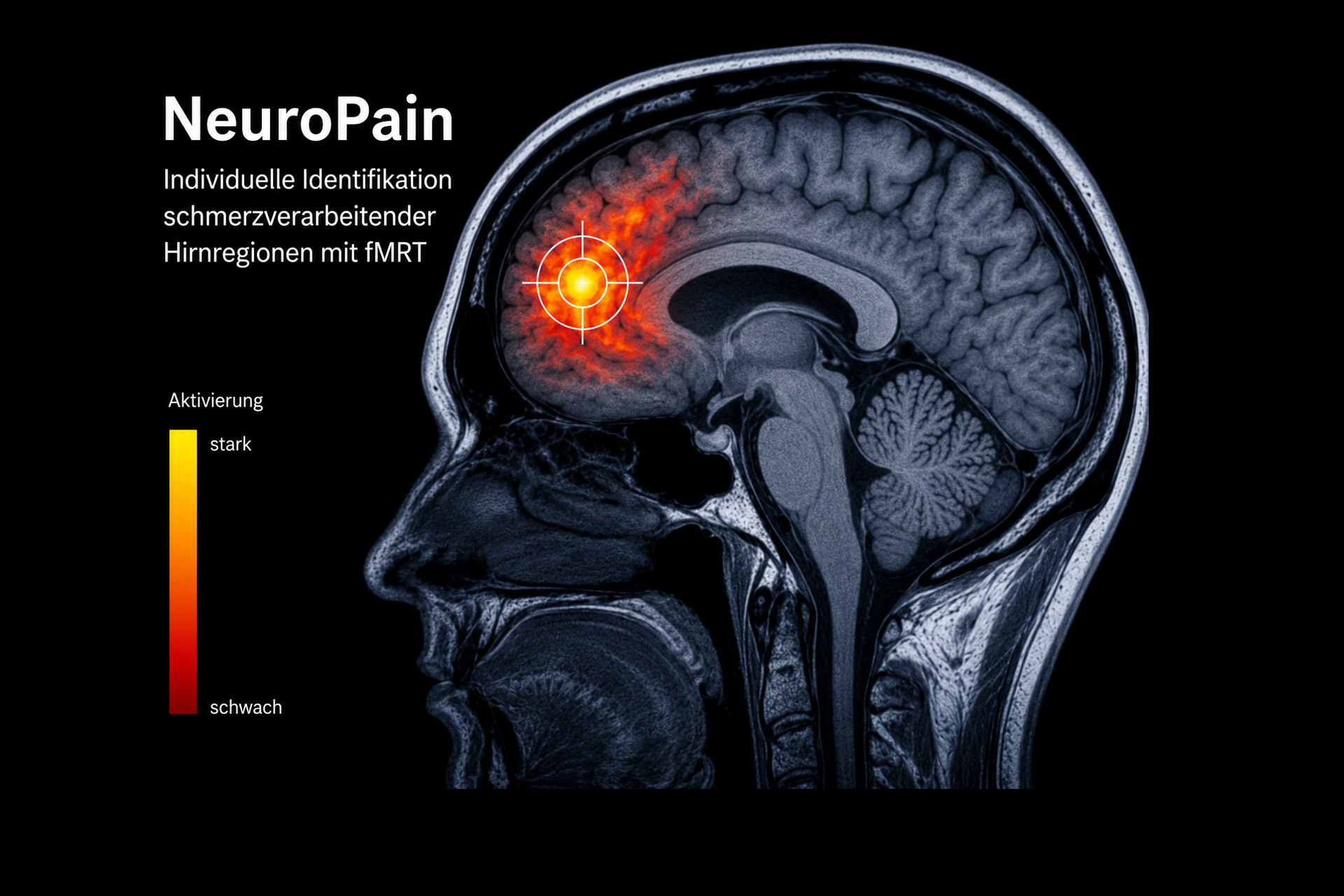
A new project called NeuroPain identifies the brain region in each patient that corresponds most closely to their personal experience of pain, and then modulates it with focused ultrasound.
Enrico Schulz / LMU Klinikum
Researchers at LMU University Hospital are using focused ultrasound as a new treatment approach to provide personalized treatment for people with chronic back pain.
NeuroPain is a groundbreaking research endeavor in its specific form. Led by Dr. Enrico Schulz, Veronica Meedt, M.Sc., and Dr. Daniel Keeser, the project will launch in June at the Department of Radiology at LMU University Hospital. “Our novel approach involves individually treating people with chronic back pain, guided by their brain processes while they feel pain,” says LMU psychologist Enrico Schulz. “We will measure these processes in the brain very precisely, as they can differ substantially from patient to patient.” The team is still seeking people with chronic back pain for the study.
Millions of people affected – limits of current therapies
According to estimates, over 20 million people in Germany suffer from chronic pain, with the back being the most common site. Available treatment methods such as painkillers and physiotherapy often provide limited relief. In addition, drugs have potential side effects, especially when taken over the long term.
Focused ultrasound as a new approach
Scientists have recently been exploring new, mainly experimental techniques for the treatment of chronic pain, such as non-invasive neuromodulation. This involves externally modulating brain activity using electricity, magnetic fields, or ultrasound. “The latest approach is focused ultrasound,” says biologist Veronica Meedt. In her capacity as an early-career researcher, Meedt is playing a large role in the planning and implementation of the study. Small transducers placed on the patient’s skull deliver ultrasonic waves to the brain with millimeter precision. These waves can reduce the perception of pain when the correct brain regions are modulated.
Personalized instead of one-size-fits-all
According to previous findings – including from the preliminary studies carried out by the Munich team – chronic pain is processed in different areas of the brain in each individual. It is no wonder, then, that earlier neuromodulation studies had only partial success. Generally, the same regions of the brain were stimulated in all participants. “For each person, we want to find the area in the brain that is most closely linked with their individual pain experience, and treat this exact region with focused ultrasound,” explains Schulz.
Brain scans as guideposts: how the study works
To do this, the researchers will conduct multiple brain scans using functional magnetic resonance imaging (fMRI). While patients lie in the scanner, they will continuously rate the intensity of their spontaneous chronic back pain. This will enable the team to track in real time how brain activity changes along with these pain fluctuations.
In the subsequent analysis phase, the team will identify the specific processes in the brain of each patient that exhibit the strongest connection to the pain dynamics. “These functional MRI data will form the basis for locating the right target region for neurostimulation,” explains psychologist Dr. Daniel Keeser.
In the second phase of the study, the identified brain region will be treated with focused ultrasound. “We’ll be testing whether the pain is noticeably and lastingly reduced after the treatments,” says Keeser.
Goal: personalized medicine in pain therapy
Beyond the potential for pain reduction, NeuroPain is pursuing a broader objective: to demonstrate that chronic pain can be mapped individually in the brain and that personalized imaging-guided neuromodulation can become a key component of precision pain therapy.
If you would like to take part in the study, you can find information and register at the project website:www.pain.sc/fus-studie
Nursing with heart and expertise: Experience the Nursing Careers Day at LMU Hospital on June 27, 2025 - a day full of inspiring insights into the demanding and holistic everyday life of nursing. Meet experts, discover a wide range of career opportunities and receive exciting information on jobs, training and further education. Come along, exchange ideas with colleagues and let yourself be inspired by nursing science in practice - without obligation and without registration.