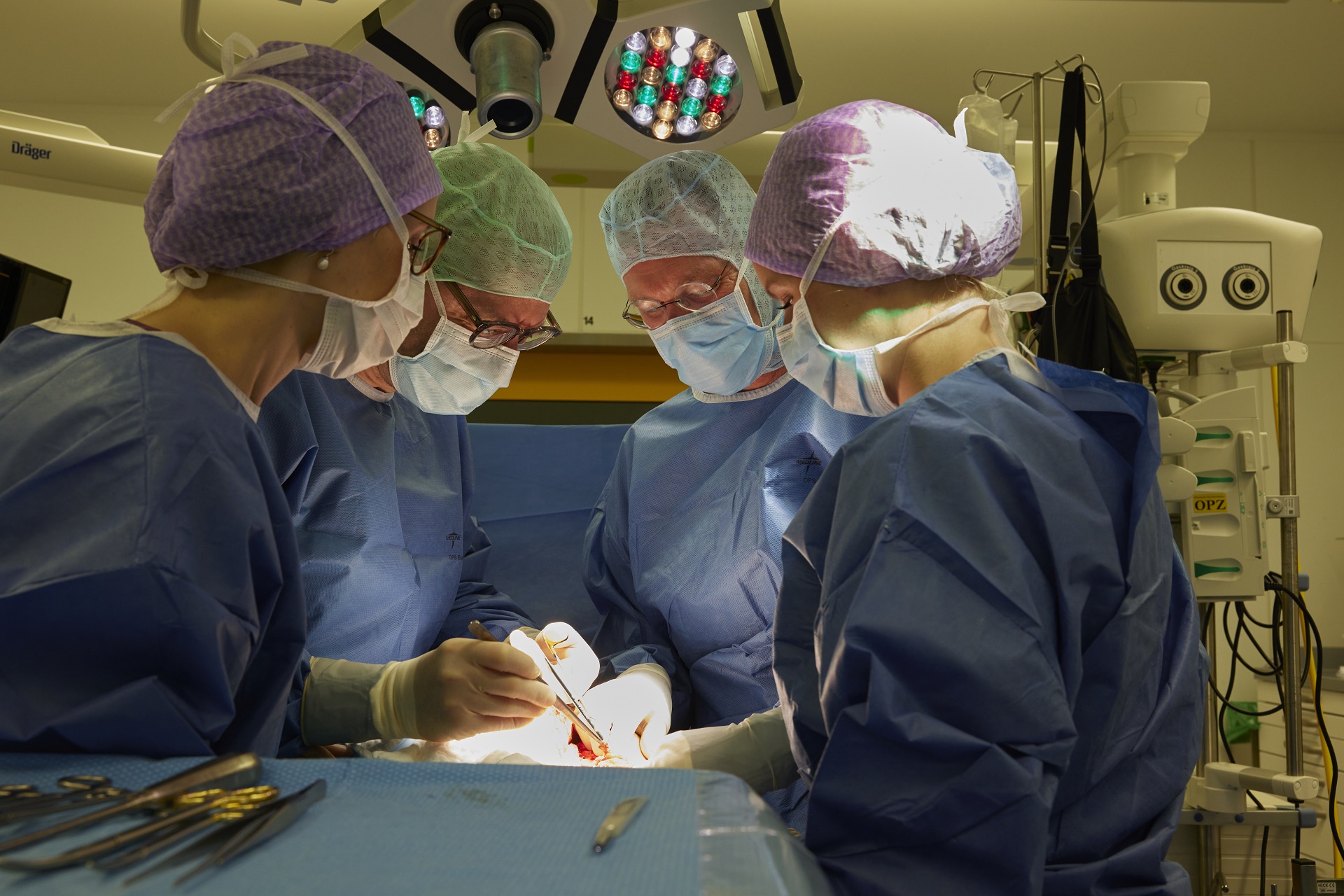
If it turns out during primary surgery that, contrary to expectations, not all of the tumor tissue can be removed, it is probably advisable to abort the operation at this point. This was the case in around 30 percent of patients in our study. "On the basis of the TRUST results, I would now recommend that these women first undergo chemotherapy and, after 3 cycles, possibly a new attempt at surgery in an interval operation. "Then there is another chance of tumor freedom for 50 percent of the women who were initially not completely operable," says Mahner.
Fortunately, there were no differences in the quality of life of the patients in the two study groups - even though the primary operation was longer and more surgical steps were performed. The complication rate was also slightly higher for the primary operation (18 percent) than for the interval operation (12 percent).
It is still unclear why the better long-term survival after primary surgery is somewhat reduced in the first few months after the operation compared to interval surgery. Whether certain factors in patient selection or individual surgical steps are responsible for this is currently being investigated. Overall, however, one thing is clear after the TRUST study - beyond the choice of method - according to Mahner: "The overriding factor in the treatment of women with ovarian cancer is ensuring the highest surgical quality."
Publication:
Sven Mahner, Florian Heitz, Sahar Salehi, Alexander Reuss, Frederic Guyon, Andreas Du Bois, Philipp Harter, Christina Fotopoulou, Denis Querleu, Berit J. Mosgaard, Bernhard Kraemer, Francesco Raspagliesi, Bjoern Lampe, Alexander Burges, Barbara Schmalfeldt, Pauline Wimberger, Holger Bronger, Dennis S. Chi, Jalid Sehouli, and Giovanni Damiano Aletti
TRUST: Trial of radical upfront surgical therapy in advanced ovarian cancer (ENGOT ov33/AGO-OVAR OP7). | Journal of Clinical Oncology
DOI: https://doi.org/10.1200/JCO.2025.43.17_suppl.LBA5500