News | 18/07/2024 | Medicine, Medical research
Immune cells monitor the maturation of platelets in the bone marrow
In collaboration with international colleagues, an LMU team has discovered how certain immune cells control the formation of new megakaryocytes from progenitor cells in the bone marrow.
Platelets play an essential role in wound healing. Underproduction can lead to devastating bleeding, while overproduction increases the fatal risk of thrombosis. Maintaining a constant platelet level in the blood (homeostasis) is therefore of crucial importance. Platelets are continuously produced by megakaryocytes (MK) and released into the blood. Researchers at the LMU University Hospital and the Biomedical Center Munich (BMC ) have now made a groundbreaking discovery: cells of the innate immune system, so-called plasmacytoid dendritic cells (pDCs), are largely responsible for controlling the maturation of new MKs and thus the formation of platelets. In addition, the pDCs adapt the quantity of MKs precisely to the body's needs. The researchers have published their findings in the journal Nature.
To find out how platelets develop (megakaryopoiesis), the lead authors - Florian Gärtner, Hellen Ishikawa-Ankerhold, Susanne Stutte and Wenwen Fu - investigated the place where platelets are formed: the bone marrow.
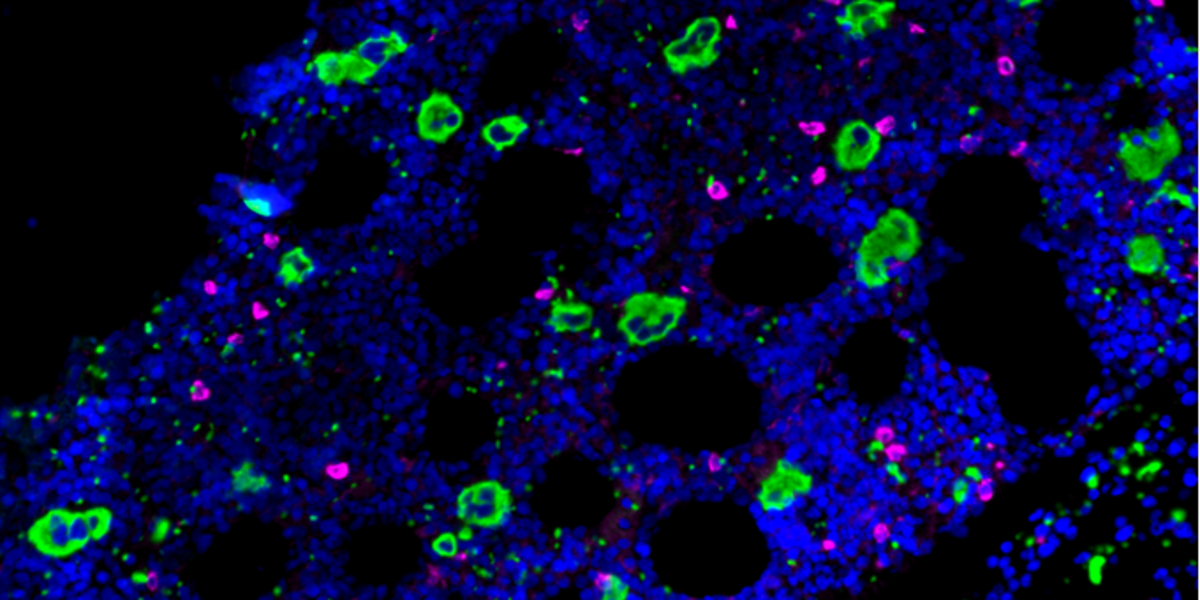
LMU Klinikum