Latest news
A research team of DZL scientists and researchers at LMU Munich has discovered a new mechanism that may contribute to the development of pulmonary fibrosis. The key player is the lysosomal ion channel TRPML1.
An ion channel is a tiny “door” in the membrane of a cell. Through this door, electrically charged particles - ions - move into or out of the cell. The ion channel TRPML1, for example, ensures that certain enzymes are released from lysosomes. These enzymes - matrix metalloproteinases (MMPs) - break down structural proteins such as collagen and elastin. This keeps lung tissue elastic and functional.
Fibrosis‑like phenotype with measurable loss of function
The team led by the study’s senior authors, Önder Yildirim (Director Munich site of the German Center for Lung Research, CPC-M) and Christian Grimm (Walther Straub Institute of Pharmacology and Toxicology, LMU/Pharmacology Department, University of Oxford, UK)),found the following:
If TRPML1 is missing, this release mechanism fails. MMPs no longer reach the tissue in sufficient amounts. As a result, collagen and elastin accumulate, the lung stiffens and loses elasticity - typical features of pulmonary fibrosis.
Experiments in mice lacking TRPML1 showed exactly this: stiffer lungs, reduced stretchability, and significantly higher levels of collagen and elastin. Their condition strongly resembled the established bleomycin model, which experimentally induces pulmonary fibrosis. Additional bleomycin treatment did not worsen symptoms, the fibrosis was already fully developed.
Outlook: A new therapeutic approach?
The team also showed that targeted pharmacological activation of TRPML1 markedly increases the release of the relevant matrix metalloproteinases - but only in cells where the channel is intact, not in cells lacking it. This makes TRPML1 a potential new target for antifibrotic therapies.
Additional DZL researchers involved: Aicha Jeridi, Herbert Schiller, Sebastian Kobold, Thomas Gudermann, Alexander Dietrich (all CPC-M, Munich)
Original publication:
Eva-Maria Weiden et al., TRPML1 suppresses pulmonary fibrosis by limiting collagen and elastin deposition, The EMBO Journal, 2026
https://link.springer.com/article/10.1038/s44318-026-00712-4
American Thoracic Society awards Önder Yildirim for "Research Excellence and Service by an International Member" for his high impact research, contributing to the understanding and treatment of lung diseases
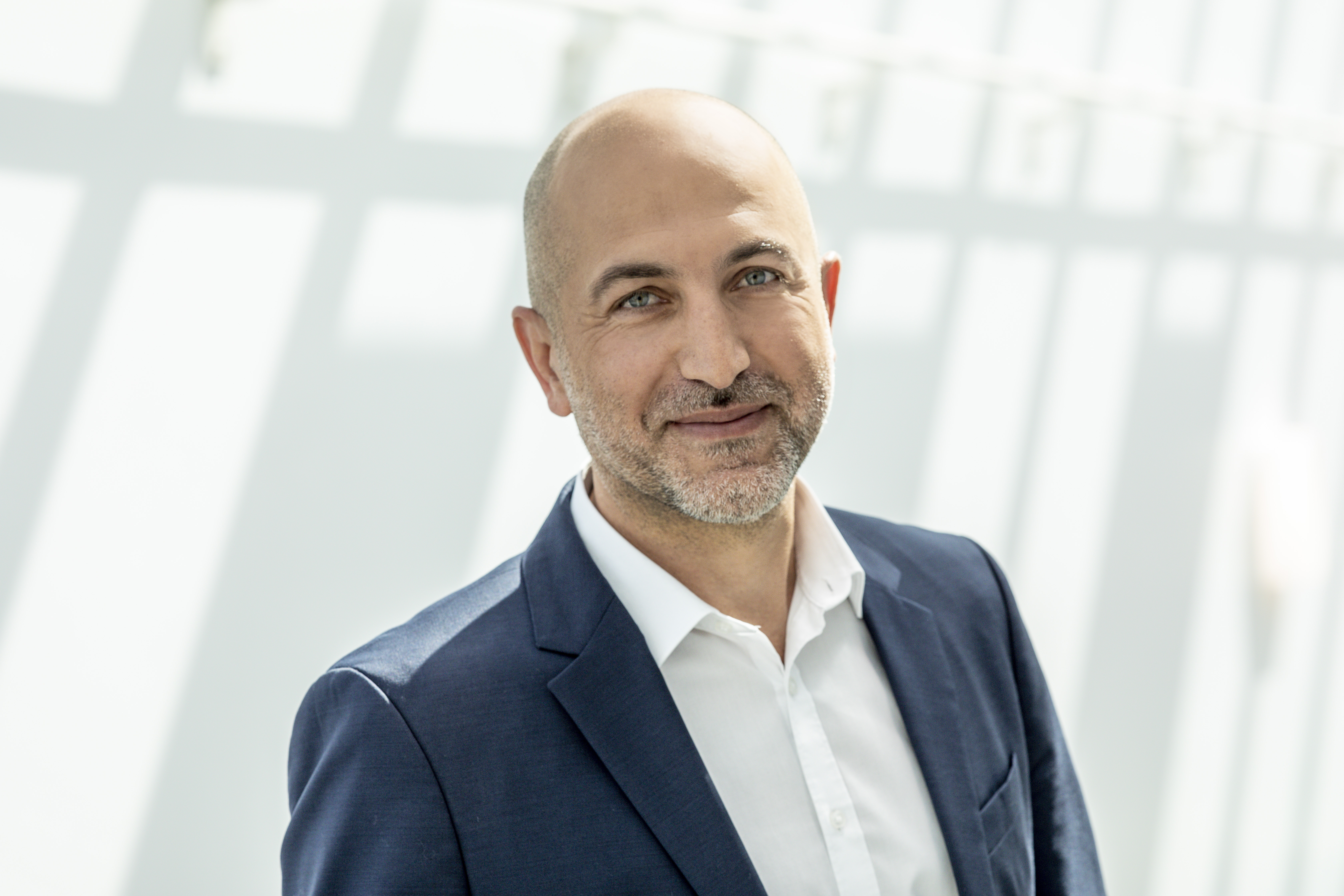
Prof. Dr. Önder Yildirim, Director of the Institute of Lung Health and Immunity (LHI/Helmholtz Munich) and Institute of Experimental Pneumology (Ludwig-Maximilian University, Munich) received the ATS Assembly Award on RCMB Research Excellence and Service by an International Member, chosen by the Assembly on Respiratory Cell and Molecular Biology (RCMB) Award Selection Committee.
With this renowned award, the American Thoracic Society (ATS) acknowledges researchers with primary appointment outside of the United States or Canada who have an established record of cutting-edge research that contributes to the understanding and treatment of lung diseases. The ATS also recognizes scientists who follow it's mission "to promote the long-range goal to decrease morbidity and mortality from respiratory disorders and life-threatening acute illnesses through an improved understanding of the biological basis of lung disease".
"It is a tremendous honor to receive this recognition from the American Thoracic Society," said Prof. Dr. Önder Yildirim, who is also Director of the CPC-M, the Munich site of the German Center of Lung Research (DZL). "This award reflects the dedication and excellence of our international team at LHI and CPC-M to advancing our lung research through collaboration, innovation, and a shared vision to improve lung health worldwide."
The award was presented at the ATS International Conference, May 2025 in San Francisco. Congratulations!
About ATS/RCMB:
Founded in 1905, the American Thoracic Society is the world's leading medical society dedicated to accelerating the advancement of global respiratory health through multidisciplinary collaboration, education, and advocacy. Core activities of the Society's more than 16,000 members in 133 countries are focused on leading scientific discoveries, advancing professional development, impacting global health, and transforming patient care.
The Assembly on Respiratory Cell and Molecular Biology (RCMB) serves as a vibrant hub for its diverse membership across the globe, thus enhancing the respiratory science community.