News | 26/11/2025
50 years of the Institute of Occupational, Social and Environmental Medicine

Between flour dust and the climate crisis

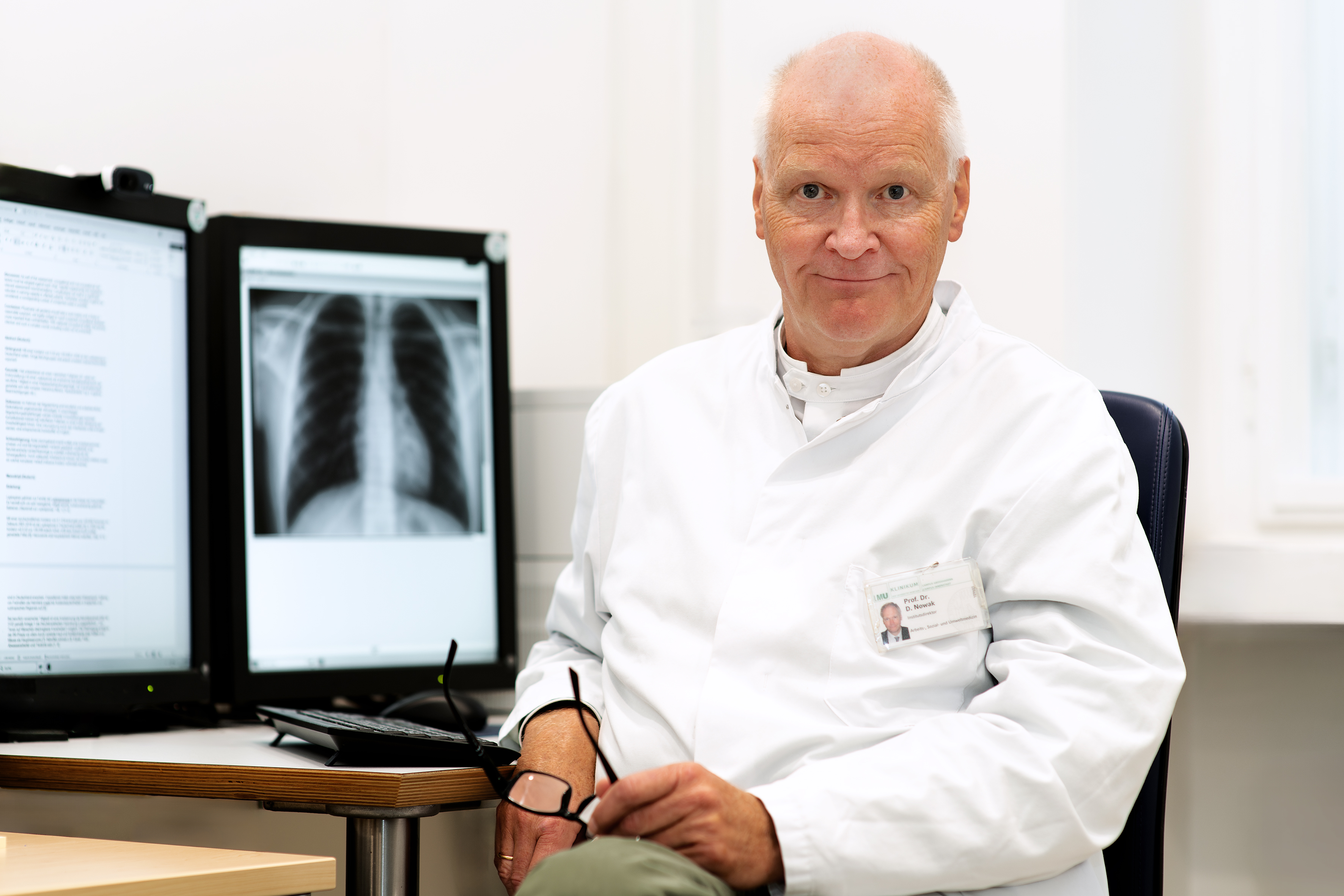
The Institute of Occupational, Social and Environmental Medicine celebrated its 50th anniversary this year - an occasion for a top-class scientific anniversary symposium, which took place on October 7 in the St. Vincent House. Prof. Dr. Dennis Nowak has headed the Institute since 1998 and has established it as a very strong research institution within LMU Medicine.
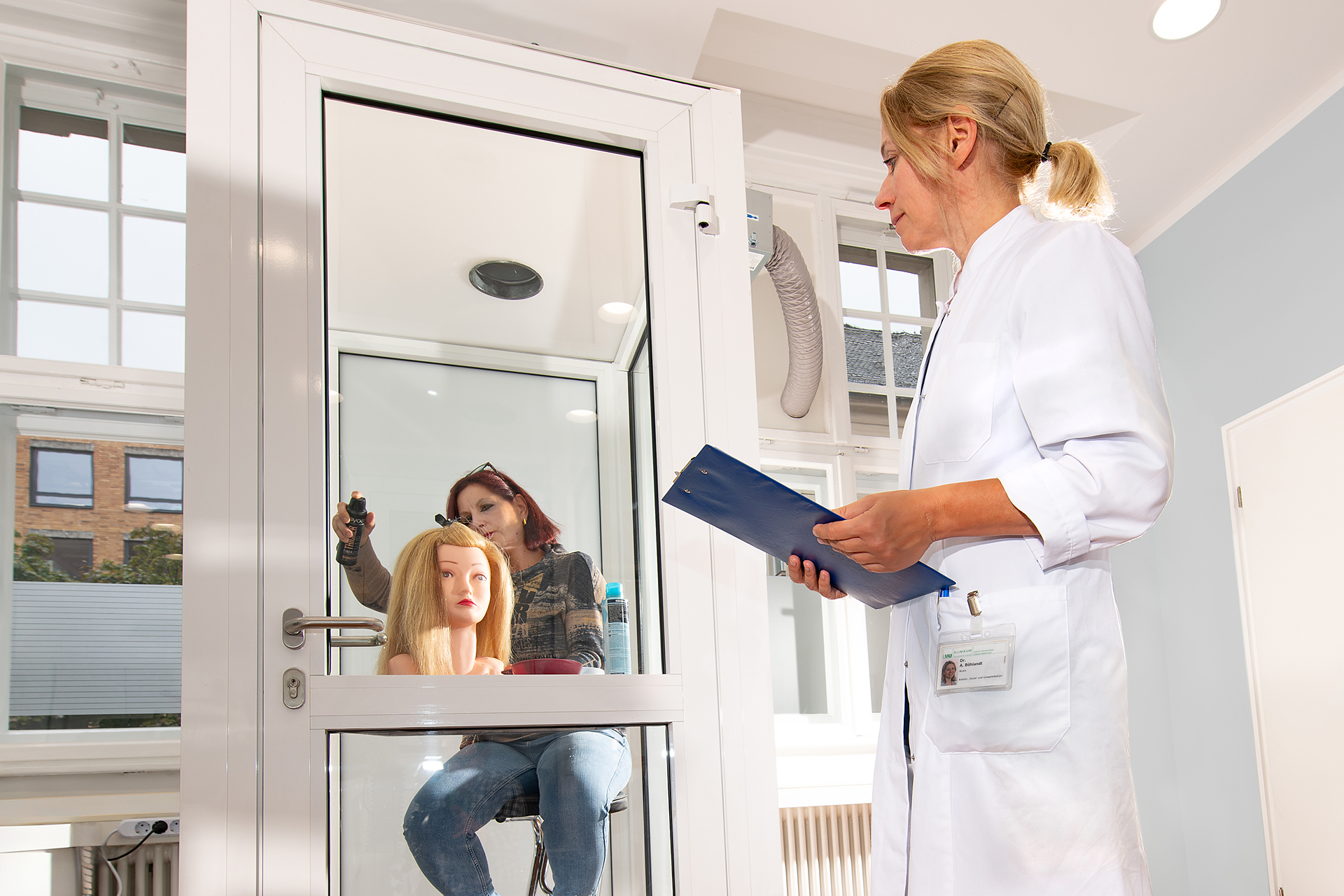
Inhalative exposures are tested under controlled conditions in the exposure chamber

"One of the Institute's most publicly discussed research projects did not actually take place in Munich, but in Aachen," Prof. Nowak reminded the guests in his presentation. In the context of the diesel scandal, it was about the effects of the air pollutant nitrogen dioxide on humans. "The fact that the experiment ended up in Aachen in 2013," explains Dennis Nowak, Director of the Institute of Occupational, Social and Environmental Medicine, "was only due to chance and our own chamber, which was overloaded and in need of an overhaul at the time. We came up with the concept."

Fragrances have already been passed through the climate chamber to test whether test subjects develop skin rashes after inhalation exposure. Asthmatics inhale isocyanates here in search of the trigger for their occupational disease. And several printers also rattled in the presence of test subjects in order to clarify how they react to the fine dust produced. The expert refers to such workplace-simulating confrontations between humans and pollutants or allergens as exposure studies or test subject studies. "They are important internationally in occupational and environmental medicine and are required by the German Research Foundation, but only very few centers in Germany have the necessary expertise," says Dennis Nowak.


The research topics range from individual risks, such as a baker's allergic reaction to flour dust, to the consequences of global climate change on people and the world of work.

The Institute's five working groups represent the broad spectrum:

  • Analytics and monitoring
  • Occupational and Environmental Epidemiology & Net Teaching
  • Experimental Environmental Medicine
  • Applied medicine and psychology at work
  • Global Environmental Medicine


Prof. Dr. Dennis Nowak

"The special feature and challenge of occupational, social and environmental medicine is that it always has to follow the pure, straight path of evidence-based scientific human medicine, with all its data and limitations, between lobbying and scaremongering," says Nowak. Or to put it another way. "Anyone who continues to implement jobs today without our findings will not be successful."
Interview in KLINIKUM aktuell (4/2025)
Factsheet "50 years of occupational and environmental medicine"

contact

Prof. Dr. med. Dennis Nowak

Director of the Institute and Polyclinic for Occupational, Social and Environmental Medicine, LMU Clinic

Originally translated with DeepL