Transplantation dossier
SAVING LIVES THROUGH ORGAN DONATION
The work of the transplantation officers at the LMU Hospital
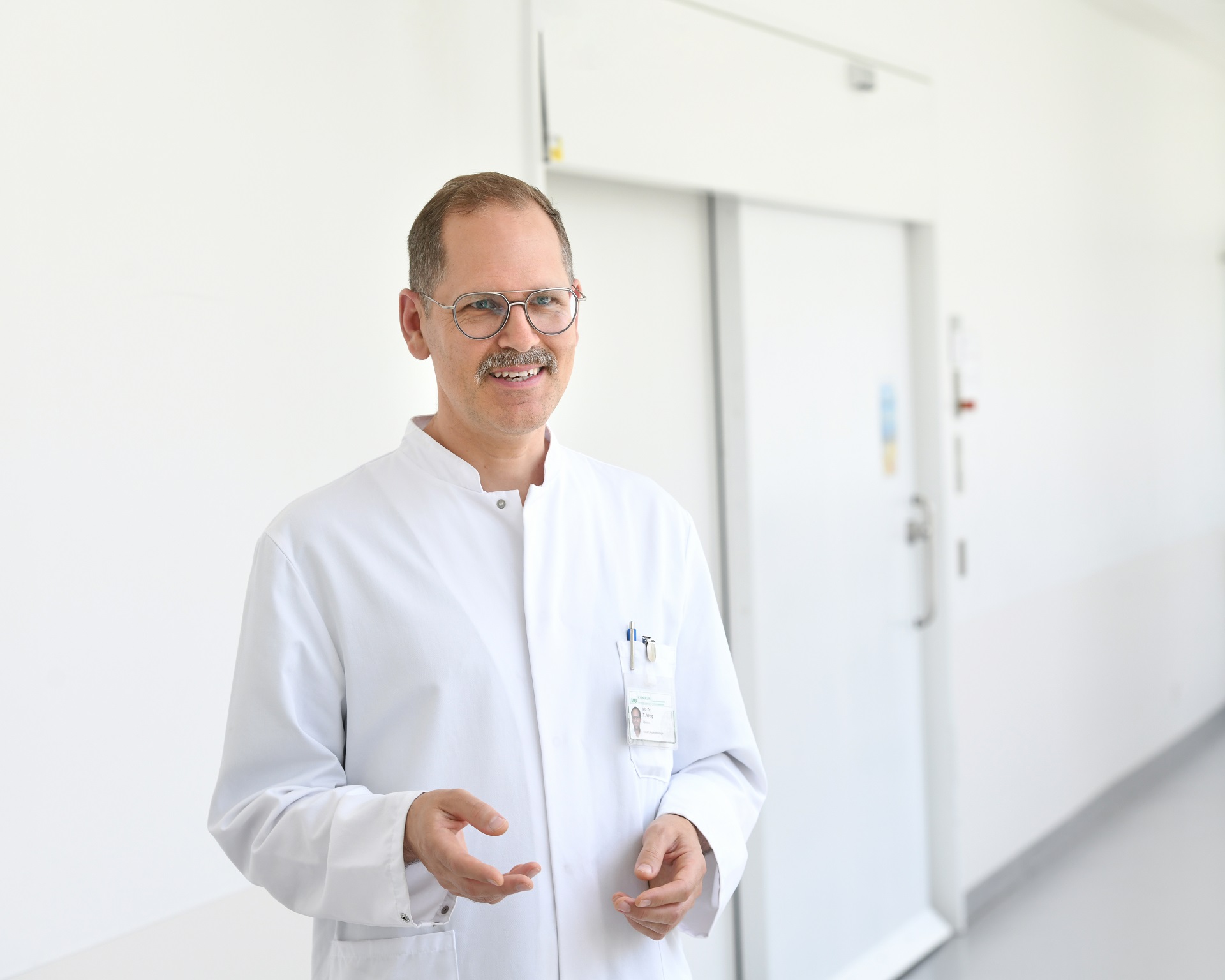
PD Dr. Thomas Weig, Transplantation Officer at the Großhadern Campus
More than 8,500 people in Germany are on the waiting list for a new organ. Some of them will die on the waiting list, as there are only around 850 organ donors each year. In Germany, relatives must give their consent if their deceased family member does not have an organ donor card. The Transplantation Act stipulates that all hospitals must appoint at least one Transplantation Officer (TXB). At LMU Hospital, two senior anaesthetists are responsible for this: PD Dr. Thomas Weig for the Großhadernsite and Dr. Ludwig Ney in the city center. KLINIKUM aktuell spoke to both of them.
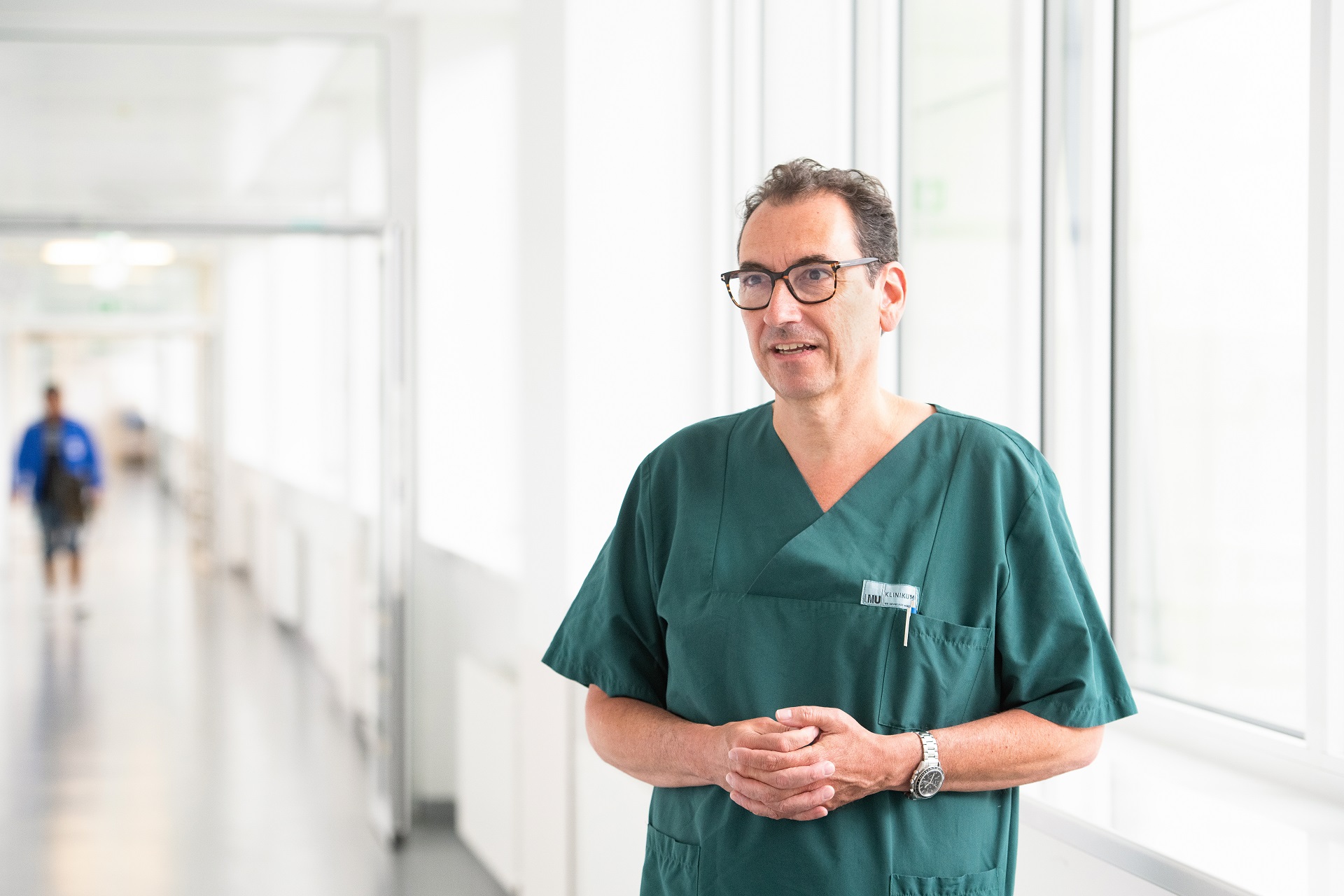
Dr. Ludwig Ney, Transplantation Officer at the Inner City Campus
Dr. Thomas Weig: We are the most important contact persons for all matters relating to organ donation - both for the clinics and for the coordinators of the DSO (German Organ Donation Foundation). We provide support in the actual implementation of organ donation, we offer further training and information and we have administrative tasks such as the legal obligation to register potential organ donors. Another important task is to support the relatives of organ donors in this stressful situation.
Dr. Thomas Weig: The prerequisite is that brain death has occurred , i.e. the irretrievable loss of all brain functions. When it comes to the question of who can really donate organs after brain death, there are many prejudices that are not true. For example, age does not play a role: the oldest donor in Germany was over 90 years old, and I myself looked after an 83-year-old organ donor . The liver went to a 16-year-old patient , and a history of malignant tumor disease is not necessarily a contraindication to organ donation. Last year, a woman who had been treated for uterine cancer a few years previously donated her organs . Our aim is to consider the option of organ donation for every patient who is deeply unconscious due to a serious injury or brain disease. These considerations usually take place in the intensive care unit. But we actually have to think about it even earlier, namely during emergency admission in the shock room. As transplant officers, we are always available to answer questions.
Dr. Ludwig Ney: There are clear indications that brain death has occurred or is imminent, such as a lack of light reflexes in the pupils and, above all, deep unconsciousness. These criteria are automatically queried throughout the hospital using the QCare digital intensive care curve based on an established DSO algorithm . We then contact the treatment team and can discuss the case individually. This works very well and is very well received . Unfortunately , however, it does not allow us to identify potential donors for whom treatment is discontinued in the shock room or immediately after intensive care admission. As each individual donor can save the lives of up to six people , we must remainvigilant regardless of the digital solution !
Dr. Thomas Weig: Finding the ideal time for such a conversation is very difficult. Whereas 20 years agoit was still the case that the topic should only be addressed after brain death had occurred , opinion on the subject has changed significantly in recent years. Living wills
have now found their way into everyday clinical practice , and that's a good thing! As a result of living wills, relatives ask about the prognosis much earlier and compare it with the patient's expressed wishes. If a brain injury is so severe that there is a risk of irreversible loss of brain function (IHA) and the neurological prognosis is therefore extremely poor, the living will comes into play . In such a situation, we address the option of possible organ donation even before brain death has been confirmed. Incidentally, the question of a possible wish for organ donation is a right of the patient. It would be terrible if you wished to be an organ donor and were denied this wish simply because nobody dared to ask your relatives.
Dr. Ludwig Ney: Our goal is to identify every possible donor ! To achieve this, staff in the acute areas of the hospital, i.e. in the emergency departments and intensive care units, must be sensitized and well informed about organ donation - that is one of our tasks. And as Thomas Weig said: We must always be available. That is why we are broadening our team. In addition to the two of us, Prof. Konstantinos Dimitriadis from Neurology and our colleagues from Anaesthesiology PD Dr. Daniela Hauer and Dr. Antonia Fritz are also involved in the topic. And Dr. Florian Hey from the Hauner Children's Hospital is the right contact personfor paediatric questions.