AG HEILIGER
Surgical Intelligence Lab
Transforming patient-specific data and surgical expertise into intelligent guidance for oncologic surgery
Clinical translation | Multimodal surgical data | Interdisciplinary AI research
Mission
How can patient-specific anatomy, surgical expertise and intraoperative data be transformed into actionable guidance for oncologic surgery?
Our central hypothesis is that patient-specific surgical models, continuously updated with intraoperative data, can make complex oncologic procedures more precise, reproducible and measurable.
Our Lab develops and evaluates data-driven methods to improve surgical decision-making, particularly in oncologic minimally invasive and robotic surgical workflows.
At the core of our research is the development of digital surgical twins that integrate patient-specific anatomy, preoperative imaging, tumor biology, clinical metadata, hospital information system data, and intraoperative information. Based on these integrated models, we investigate how optimized surgical treatment strategies, standardized workflows, and individualized intraoperative guidance systems can be developed for oncologic visceral surgery.
Our goal is to systematically capture, analyze, and translate collective surgical knowledge, anatomical and patient-specific variability, and intraoperative decision-making processes into next-generation intelligent surgical assistance systems.
Research Program
Patient-Specific Surgical Intelligence
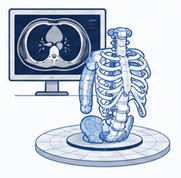
We develop patient-specific digital twins based on preoperative CT imaging, anatomical segmentations, tumor information, and clinical contextual data. These models serve as the foundation for preoperative planning, intraoperative guidance, and data-driven analysis of surgical strategies.
Intraoperative Intelligence & Guidance
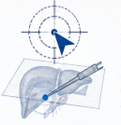
A particular focus is placed on laparoscopic and robotic oncological procedures. The aim is to provide context-sensitive intraoperative visualization of relevant anatomical structures, areas at risk, and surgical target regions, thereby improving orientation, safety, and standardization.
Surgical Workflow Intelligence
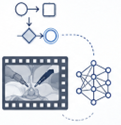
By analyzing intraoperative videos, tracking data, imaging, and clinical metadata, we investigate surgical workflows, decision-making processes, and implicit expert knowledge. This involves the use of multimodal models, agentic AI methods, and computer-assisted workflow analysis.
Surgical Quality & Data-Driven Oncology
In the long term, surgical quality, lymphadenectomy patterns, resection strategies, and oncological outcome parameters will be analyzed using data-driven approaches. This opens up new perspectives for personalized surgery, quality assurance, and multimodal treatment planning.
Team
An interdisciplinary group of clinicians and researchers working at the interface of surgery, computer vision, medical imaging and artificial intelligence.
- Dr. Alexander Winkler (Post Doc)
- Cagatay Alici (PhD candidate)
- Viktoria Schmalhofer (Surgical resident)
- Felix Pabst (Working Student)
Funding
Our research is supported by BMBF, BMFTR, Bayern Innovativ and German Cancer Aid (Deutsche Krebshilfe).
Partners & Collaborators
Our Group collaborates with clinical, academic and industrial partners in the fields of surgical oncology, artificial intelligence, computer vision, medical imaging, robotics and translational surgical technologies:
AI, Computer Vision & Surgical Technology
Prof. Nassir Navab · Dr. Ulrich Eck · Dr. Benjamin Killeen · Max Fehrentz
Clinical & Translational Surgery
Prof. Bernhard Renz · Prof. Markus Guba · Dr. Dionysos Koliogianis · Dr. Malte Schirren · Dr. Felix Hofmann · Dr. Alexander Frank · Dr. Dorian Andrade · Prof. Dirk Wilhelm
Medical Imaging & Digital Twins
Prof. Michael Ingrisch · Prof. Guillaume Landry · Dr. Felix Hofmann
Join the lab
We are regularly looking for motivated students, researchers and clinicians interested in the intersection of surgery, artificial intelligence, medical technology and translational research.
Open positions include student research assistants (HiWis), medical doctoral candidates, PhD students and clinical and computer science research fellows.
We offer access to prospectively acquired surgical data, interdisciplinary supervision and opportunities to develop and clinically evaluate new technologies.
Interested?
Please contact us with a short motivation statement, CV and relevant background information.
Collaborative Opportunities
We welcome collaborations with clinical, academic and industrial partners working in surgical oncology, artificial intelligence, computer vision, robotics and translational medicine. Our group is particularly interested in multicenter studies, surgical data science initiatives and the development of next-generation intraoperative guidance systems.
Interested?
For collaboration proposals or to learn more about our ongoing projects, please contact us.
Latest Publications
Wang TD, Bastian L, Czempiel T, Heiliger C, Navab N. Beyond role-based surgical domain modeling: Generalizable re-identification in the operating room. Medical Image Analysis. 2025;105:103687.
Winkler A, Heiliger C, Heiliger T, Eck U, Karcz K, Navab N. Automatic Annotations by Augmented Reality-Enabled Laparoscopic Surgery. Healthcare Technology Letters. 2025;12:e70031.
Fehrentz M, Winkler A, Heiliger T, Haouchine N, Heiliger C, Navab N. BridgeSplat: Bidirectionally Coupled CT and Non-rigid Gaussian Splatting for Deformable Intraoperative Surgical Navigation. Medical Image Computing and Computer Assisted Intervention – MICCAI 2025. Springer, Lecture Notes in Computer Science.
Yuan K, Chen T, Li S, Lavanchy JL, Heiliger C, et al. Recognizing Surgical Phases Anywhere: Few-Shot Test-Time Adaptation and Task-Graph Guided Refinement. Medical Image Computing and Computer Assisted Intervention – MICCAI 2025. Springer, Lecture Notes in Computer Science.
Wang TD, Heiliger C, Navab N, Bastian L. TrackOR: Towards Personalized Intelligent Operating Rooms Through Robust Tracking. Clinical Image-Based Procedures, Distributed and Collaborative Learning, Artificial Intelligence for Combating COVID-19 and Secure and Privacy-Preserving Machine Learning – MICCAI Workshops. Springer, Lecture Notes in Computer Science.
Heiliger C, et al. Phantom study on surgical performance in augmented reality laparoscopy. International Journal of Computer Assisted Radiology and Surgery. 2023;18:1345–1354.
Martin-Gomez A, Merkl F, Winkler A, Heiliger C, Eck U, Karcz K, Navab N. A Closer Look at Dynamic Medical Visualization Techniques. IEEE International Symposium on Mixed and Augmented Reality (ISMAR). 2023.
Heiliger C, Piecuch J, Frank A, Andrade D, von Ehrlich-Treuenstätt V, Evtimova D, Kühn F, Werner J, Karcz K. Laparoscopic intraarterial catheterization with selective ICG fluorescence imaging in colorectal surgery. Scientific Reports. 2021;11:14753.
Frank AHR, Heiliger C, Andrade D, Werner J, Karcz K. Intra-arterial versus negative-staining of embryonal resection borders with indocyanine green (ICG) fluorescence for total mesorectal excision in colorectal cancer – an experimental feasibility study in a porcine model. Minimally Invasive Therapy & Allied Technologies. 2022;31(1):107–111.
Heiliger C, Piecuch J, Frank A, Andrade D, von Ehrlich-Treuenstätt V, Schiergens T, Rentsch M, Werner J, Karcz K. Intraarterial indocyanine green (ICG) fluorescence augmentation by marking embryonal resection areas in colorectal surgery: a feasibility study in a porcine model. Minimally Invasive Therapy & Allied Technologies. 2019;28(6):321–325.