Center for Neurostimulation - CNSᴸᴹᵁ
Non-invasive brain stimulation research at LMU University Hospital, from mechanisms to clinical trials
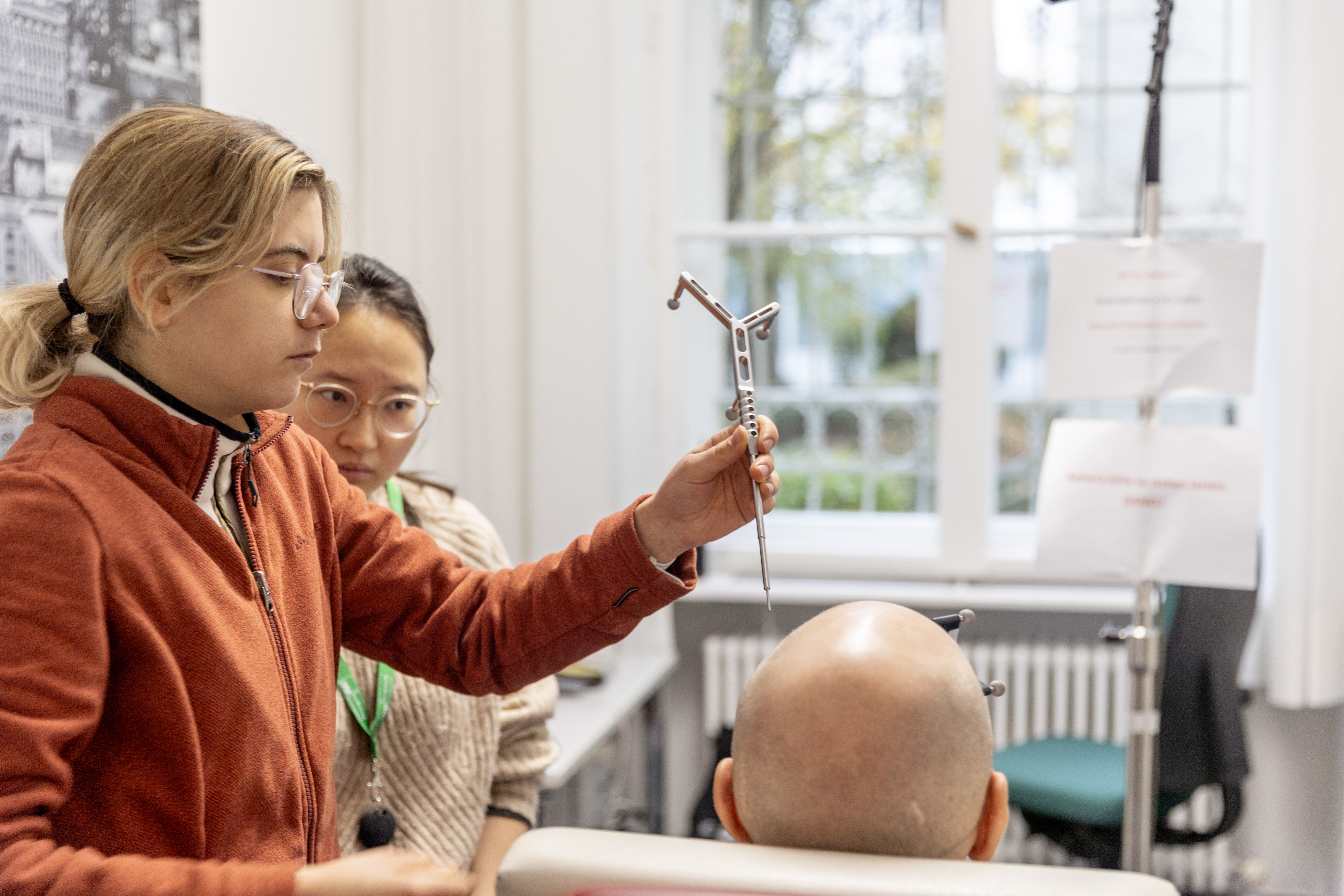
“What fires together, wires together.” Our brain adapts by strengthening and weakening connections between its 86 billion neurons. This plasticity lets us learn and adapt, but it can also make mental disorders hard to treat. Non-invasive brain stimulation (NIBS), such as TMS and tDCS, modulates these networks from outside the skull. It helps us understand brain function and is increasingly used to treat conditions such as major depression.
At the CNSᴸᴹᵁ we study the clinical, behavioural, neurophysiological and molecular effects of NIBS. We combine stimulation with multimodal imaging, including functional magnetic resonance imaging (fMRI), magnetic resonance spectroscopy (MRS) and interleaved TMS-fMRI, and we design and run large multicentre clinical trials. Our goal is to translate these insights into effective, evidence-based care.
Lay summary
Some people with depression do not improve enough with medication or psychotherapy. Non-invasive brain stimulation offers another option: a magnetic coil (transcranial magnetic stimulation, TMS) or a weak electrical current (transcranial direct current stimulation, tDCS), applied to the scalp, changes activity in brain regions involved in mood. Treatment needs no anaesthesia, and patients stay awake. We study how well it works, for whom, and how to make it more effective, especially for young people early in their illness.
Kurz erklärt
Nicht allen Menschen mit Depression helfen Medikamente oder Psychotherapie ausreichend. Die nicht-invasive Hirnstimulation ist eine weitere Möglichkeit: Eine Magnetspule (transkranielle Magnetstimulation, TMS) oder ein schwacher Gleichstrom (transkranielle Gleichstromstimulation, tDCS) verändert die Aktivität von Hirnregionen, die an der Stimmung beteiligt sind. Die Behandlung braucht keine Narkose und keine Operation. Wir untersuchen, wie gut sie wirkt, bei wem und wie sie sich verbessern lässt, besonders bei jungen Menschen früh im Krankheitsverlauf. An vielen unserer Studien können Patient*innen teilnehmen.
Co-lead
Core research team
- Dr. Jonas Björklund
- Esther Dechantsreiter, M.Sc.
- Beate Dornheim
- Miaoxi Chen, M.Sc.
- Margarethe Woeckel
Doctoral candidates
- Marlen Becher
- Juna Bizhga
- Kristin Hagenah
- Barbara Huber
- Pia Reichelmeir
- Hilde Steinbeck
- Lisa Tagnin
- Helena Wagner
- Katharina von Wartensleben
Research Group Multimodal Neuroimaging and Neuromodulation
- Lead: Dr. Daniel Keeser
- Yang Ye
Early intervention with repetitive theta burst stimulation in adolescents and young adults with depressive disorders: a sequential Bayesian, randomized controlled pilot trial (EARLY-BURST)
- This study investigates whether a 6-week treatment with intermittent theta burst stimulation in adolescents and young adults with depressive disorders, who have not been treated with medication in the last 12 months (except for short-term on-demand medication), effectively reduces depressive symptoms.
- Funded by the German Federal Ministry of Education and Research (BMBF) as part of the German Center for Mental Health (DZPG) and the Medical & Clinician Scientist Program (MCSP) of the LMU Faculty of Medicine
- Registration: DRKS00033313 (German Clinical Trials Register)
Efficacy of repetitive transcranial magnetic stimulation (rTMS) for the acute treatment of depressive symptoms in adolescents and young adults: a protocol for a systematic review and individual patient data meta-analysis
This systematic review and individual patient data meta-analysis aims to answer the following questions: What is the effect of acute treatment with repetitive transcranial magnetic stimulation (rTMS) compared with sham controls in adolescents and young adults with depressive symptoms? Which patient characteristics moderate its effect on depression outcomes (depressive symptom severity, treatment response, remission)?
- Funded by the German Federal Ministry of Education and Research (BMBF) as part of the German Center for Mental Health (DZPG)
- Registration: CRD42024592765 (PROSPERO 2024)
Effectiveness of rTMS compared to SSRI as early treatment of depression (Early-TMS)
- Randomized, rater-blinded, multicenter phase 2 trial comparing bilateral theta burst stimulation (TBS) with SSRI treatment as first-line therapy for major depression.
- Sponsor: University of Tübingen
- Funded by the Deutsche Forschungsgemeinschaft (DFG) & by the German Federal Ministry of Education and Research (BMBF) as part of the German Center for Mental Health (DZPG)
- Registration: NCT06545474 (ClinicalTrials.gov)
BEAM: Brain Stimulation for Ethiopia’s Advanced Mental health care
- Bilateral project to establish Ethiopia’s first national rTMS unit for treatment-resistant depression at SPHMMC in Addis Ababa, including infrastructure development and specialist training at the Center for Neurostimulation.
- Cooperation Partners: St. Paul’s Hospital Millennium Medical College (Surafel Worku), Department of Psychiatry and Psychotherapy at LMU University Hospital (PD Dr. Andrea Jobst-Heel), Center for Neurostimulation (CNSLMU) at LMU University Hospital (Prof. Frank Padberg, Dr. Gerrit Burkhardt)
- Funded by the Federal Ministry for Economic Cooperation and Development and the Else Kröner-Fresenius-Stiftung over GIZ (Deutsche Gesellschaft für Internationale Zusammenarbeit) – Funding line Klinikpartnerschaften Global (2025-2027)
Neurobiological Signatures of Transcranial Magnetic Stimulation in Depression: Characterization of Treatment Trajectories through Interleaved TMS-fMRI (THREAD - TMS-fMRI Module)
- The aim of this project is to characterize the immediate neural effects of intermittent theta burst stimulation (iTBS) in patients with depression using interleaved TMS-fMRI, measuring dose-dependent BOLD responses and connectivity modulations in prefrontal cortex regions and depression-relevant networks during a clinical iTBS treatment course
- Funded through the Funding programme for research and teaching (FöFoLe) Start-up financing of the LMU Faculty of Medicine
The DiSCoVeR Project: Examining the synergistic effects of a cognitive control videogame and self-administered non-invasive brain stimulation on alleviating depression (DiSCoVeR)
- Multicenter, double-blind, two-arm, placebo-controlled randomized trial (RCT) testing the feasibility and efficacy of an innovative, remotely-controlled treatment approach for major depression
- Sponsor: The Hebrew University of Jerusalem
- Funded by ERA-NET NEURON (Network of European Funding for Neuroscience Research, European Commission), German Federal Ministry of Education and Research (BMBF), Ministry of Health (MOH) of Israel, Swiss National Science Foundation (SNSF) and State Education and Development Agency (VIAA) of Latvia
- Registration: NCT04953208 (ClinicalTrials.gov)
MR-informed, navigated transcranial magnetic stimulation with interleaved functional MR-imaging (MR-stim)
- The aim of this project is to establish a paradigm measuring the online modulation (functional MR) of prefrontal cortex regions involved in pathogenesis of depression to be used as predictor of treatment response to non-invasive brain stimulation
- Funded as part of the ERA-NET NEURON-funded The DiSCoVeR Project and Medical & Clinician Scientist Program (MCSP) of the LMU Faculty of Medicine
Brain stimulation for depression-associated symptoms – a real-world clinical investigation of noninvasive brain stimulation treatments offered at the Department of Psychiatry and Psychotherapy of the LMU Hospital
- This project aims at implementing a structured, scientific assessment of non-invasive brain stimulation treatments currently offered at our outpatient and inpatient service. We have been able to offer TMS and tDCS treatments to over 1000 patients starting in 1998. Such a large, naturalistic cohort offers a unique possibility to gain insights about the real-world application of non-invasive brain stimulation interventions. Furthermore, these data have the potential to guide our future clinical decision making processes and to improve the treatment of the specific cohort of patients who present at our center.
- Registration: DRKS00024776 (German Clinical Trials Register)
Treatment of major depressive disorder with bilateral theta burst stimulation (TBS-D)
- Randomized, double-blind, sham-controlled multicenter clinical trial testing the efficacy of TBS as a treatment approach for major depression.
- Sponsor: University of Tübingen
- Funded by the German Federal Ministry of Education and Research (BMBF)
- Registration: NCT04392947 (ClinicalTrials.gov)
Validation of a Single-Subject Treatment Outcome Predictor for Repetitive Transcranial Magnetic Stimulation (rTMS) to Improve Negative Symptoms in Schizophrenia (PREMISS)
- Multicenter study aimed at 1.) validating a single-subject treatment outcome predictor for high-frequency repetitive transcranial magnetic stimulation (rTMS) applied to improve negative symptoms in schizophrenia spectrum disorders, 2.) evaluating the efficacy of rTMS in reducing negative symptoms in schizophrenia spectrum disorders in a naturalistic setting and 3.) evaluating whether an extension with intermittent theta burst stimulation (iTBS) is superior to an extension of rTMS in initial non-responders
- Funded by ERA PerMed (01KU1905B)
- Registration: DRKS00022214 (German Clinical Trials Register)
- Multicentre, double-blind, randomised, sham-controlled clinical trial. To assess the efficacy of bilateral continuous theta burst stimulation (cTBS) as a therapeutic intervention against auditory hallucinations in schizophrenia.
- Sponsor: University of Tübingen
- Funded by Deutsche Forschungsgemeinschaft (DFG)
- Registration: NCT02670291 (ClinicalTrials.gov)
Pathophysiology-specific development of transcranial direct current stimulation (tDCS) of the prefrontal cortex – studies on functional MRT connectivity
- Sponsor: LMU University Hospital
- Funded by the German Federal Ministry of Education and Research (BMBF) as part of the German Center for Brain Stimulation Research network
Transcranial direct current stimulation (tDCS) as a treatment for major depression (Depression DC)
- A prospective multicentre double-blind randomized placebo-controlled trial investigating the efficacy and tolerability of repeated tDCS as treatment for major depression.
- Sponsor: LMU University Hospital
- Funded by the German Federal Ministry of Education and Research (BMBF) as part of the German Center for Brain Stimulation Research network
- Registration: NCT02530164 (ClinicalTrials.gov)
- Randomized, double-blind, placebo-controlled multicenter trial to investigate if cognitive-behavioral psychotherapy (CBT) when combined with prefrontal transcranial direct current stimulation (tDCS) is more efficacious than CBT with sham tDCS or CBT alone.
- Sponsor: Charite Berlin
- Funded by the German Federal Ministry of Education and Research (BMBF) as part of the German Center for Brain Stimulation Research network
- Registration: NCT02633449 (ClinicalTrials.gov)
- Home transcranial direct current stimulation with gamified cognitive control training for depression: a randomized clinical trial Dechantsreiter E, Padberg F, Benjamini Y, Goerigk S, Rubene-Kesele L, Konosonoka L, Vogelmann U, Cohen T, Lerner N, Burkhardt G, et al. JAMA Netw Open 2026
- Theta burst stimulation of temporo-parietal cortex regions for the treatment of persistent auditory hallucinations: a multicentre, randomised, sham-controlled, triple-blind phase 3 trial in Germany Plewnia C, Brendel B, Schwippel T, Becker-Sadzio J, Hajiyev I, Pross B, Strube W, Hasan A, Campana M, Padberg F, et al. Lancet Psychiatry 2025
- Dose-Dependent Target Engagement of a Clinical Intermittent Theta Burst Stimulation Protocol: An Interleaved Transcranial Magnetic Stimulation–Functional Magnetic Resonance Imaging Study in Healthy People Chang KY, Tik M, Mizutani-Tiebel Y, Taylor P, van Hattem T, Falkai P, Padberg F, Bulubas L, Keeser D. Biological Psychiatry: Cognitive Neuroscience and Neuroimaging
2024
- Transcranial direct current stimulation as an additional treatment to selective serotonin reuptake inhibitors in adults with major depressive disorder in Germany (DepressionDC): a triple-blind, randomised, sham-controlled, multicentre trial Burkhardt G, Kumpf U, Crispin A, Goerigk S, Andre E, Plewnia C, Brendel B, Fallgatter A, Langguth B, Abdelnaim M, Hebel T, Normann C, Frase L, Zwanzger P, Diemer J, Kammer T, Schönfeldt-Lecuona C, Kamp D, Bajbouj M, Behler N, Wilkening A, Nenov-Matt T, Dechantsreiter E, Keeser D, Bulubas L, Palm U, Blankenstein C, Mansmann U, Falkai P, Brunoni A, Hasan A, Padberg F. Lancet 2023
- Effects of repetitive transcranial magnetic stimulation of the left dorsolateral prefrontal cortex on symptom domains in neuropsychiatric disorders: a systematic review and cross-diagnostic meta-analysis Kan RL, Padberg F, Giron CG, Lin TTZ, Zhang BB, Brunoni AR, Kranz GS. Lancet Psychiatry 2023
- Efficacy of Augmentation of Cognitive Behavioral Therapy With Transcranial Direct Current Stimulation for Depression: A Randomized Clinical Trial Aust S, Brakemeier E-L, Spies J, Herrera-Melendez A L, Kaiser T, Fallgatter A, Plewnia C, Mayer S V, Dechantsreiter E, Burkhardt G, Strauß M, Mauche N, Normann C, Frase L, Deuschle M, Böhringer A, Padberg F, Bajbouj M. JAMA Psychiatry 2022
- Efficacy and Safety of Transcranial Direct Current Stimulation for Treating Negative Symptoms in Schizophrenia: A Randomized Clinical Trial Valiengo LDCL, Goerigk S, Gordon PC, Padberg F, Serpa MH, Koebe S, Santos LAD, Lovera RAM, Carvalho JB, van de Bilt M, Lacerda ALT, Elkis H, Gattaz WF, Brunoni AR. JAMA Psychiatry 2020
- Clinical patterns differentially predict response to transcranial direct current stimulation (tDCS) and escitalopram in major depression: A machine learning analysis of the ELECT-TDCS study Kambeitz J, Goerigk S, Gattaz W, Falkai P, Benseñor IM, Lotufo PA, Bühner M, Koutsouleris N, Padberg F, Brunoni AR. J Affect Disord. 2020
- Antidepressant effects of tDCS are associated with prefrontal gray matter volumes at baseline: Evidence from the ELECT-TDCS trial Bulubas L, Padberg F, Bueno PV, Duran F, Busatto G, Amaro E Jr, Benseñor IM, Lotufo PA, Goerigk S, Gattaz W, Keeser D, Brunoni AR. Brain Stimulation 2019
- Testing assumptions on prefrontal transcranial direct current stimulation: Comparison of electrode montages using multimodal fMRI Wörsching J, Padberg F, Goerigk S, Heinz I, Bauer C, Plewnia C, Hasan A, Ertl-Wagner B, Keeser D. Brain Stimulation 2018
- Test-retest reliability of prefrontal transcranial Direct Current Stimulation (tDCS) effects on functional MRI connectivity in healthy subjects Wörsching J, Padberg F, Helbich K, Hasan A, Koch L, Goerigk S, Stoecklein S, Ertl-Wagner B, Keeser D. Neuroimage 2017
- Prefrontal Transcranial Direct Current Stimulation for Treatment of Schizophrenia With Predominant Negative Symptoms: A Double-Blind, Sham-Controlled Proof-of-Concept Study Palm U, Keeser D, Hasan A, Kupka MJ, Blautzik J, Sarubin N, Kaymakanova F, Unger I, Falkai P, Meindl T, Ertl-Wagner B, Padberg F. Schizophr Bull. 2016
- Imaging transcranial direct current stimulation (tDCS) of the prefrontal cortex-correlation or causality in stimulation-mediated effects? Wörsching J, Padberg F, Ertl-Wagner B, Kumpf U, Kirsch B, Keeser D. Neurosci Biobehav Rev. 2016
- Efficacy and safety of deep transcranial magnetic stimulation for major depression: a prospective multicenter randomized controlled trial Levkovitz Y, Isserles M, Padberg F, Lisanby SH, Bystritsky A, Xia G, Tendler A, Daskalakis ZJ, Winston JL, Dannon P, Hafez HM, Reti IM, Morales OG, Schlaepfer TE, Hollander E, Berman JA, Husain MM, Sofer U, Stein A, Adler S, Deutsch L, Deutsch F, Roth Y, George MS, Zangen A. World Psychiatry 2015
- Prefrontal transcranial direct current stimulation changes connectivity of resting-state networks during fMRI Keeser D, Meindl T, Bor J, Palm U, Pogarell O, Mulert C, Brunelin J, Möller HJ, Reiser M, Padberg F. J Neurosci. 2011
- Theta burst stimulation of the prefrontal cortex: safety and impact on cognition, mood, and resting electroencephalogram Grossheinrich N, Rau A, Pogarell O, Hennig-Fast K, Reinl M, Karch S, Dieler A, Leicht G, Mulert C, Sterr A, Padberg F. Biol Psychiatry 2009
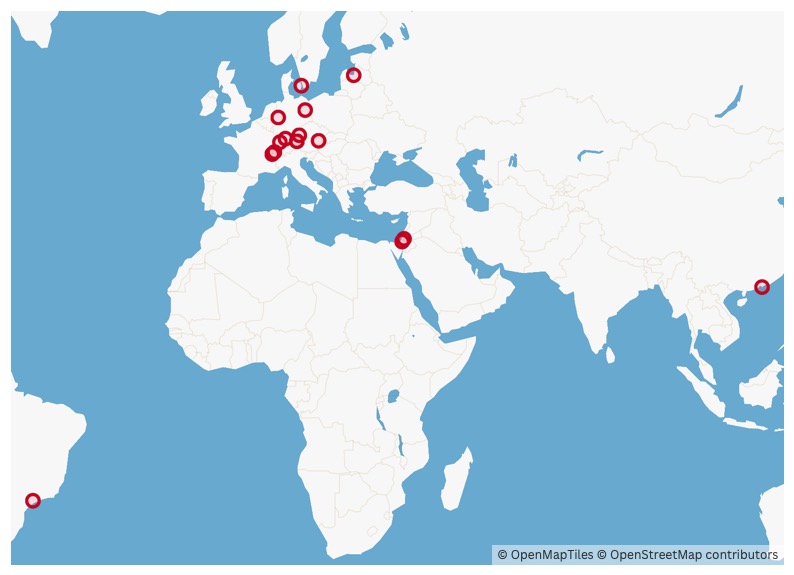
- Malek Bajbouj, Charite Berlin
- Daphné Bavelier, University of Geneva
- Andre Russowsky Brunoni, Universidade de São Paulo
- Stephan Goerigk, Fresenius Hochschule Munich
- Friedhelm Hummel, Swiss Federal Institute of Technology EPFL, Geneva
- Georg Kranz, The Hongkong Polytechnic University
- Berthold Langguth, University of Regensburg
- Mor Nahum, The Hebrew University of Jerusalem
- Michael Nitsche, TU Dortmund
- Claus Normann, University of Freiburg
- Christian Plewnia, University of Tuebingen
- Elmars Rancans, Riga Stradins University
- Lais Razza, Ghent University
- Hartwig R. Siebner, Danish Research Center for Magnetic Resonance, Copenhagen
- Martin Tik, University of Vienna
- Axel Thielscher, Danish Research Center for Magnetic Resonance, Copenhagen
- Ulrike Vogelmann, TU Munich
- Christian Windischberger, University of Vienna
- Abraham Zangen, Ben-Gurion University of the Negev
Join us
Patients
We are recruiting people with major depressive disorder for our studies (German language required).
Für unsere Studien suchen wir laufend Patient*innen mit Depression.
Students
We offer doctoral or master's theses for advanced medicine and psychology students. You will join our seminars and congresses, see clinical care and work on a project based on our studies or your own idea. We support you in publishing in international journals. Basic German is required because of patient contact. Please email us your CV.
Center for Neurostimulation – CNSᴸᴹᵁ
Department of Psychiatry and Psychotherapy, LMU University Hospital, LMU Medizin